Mold inspection for a barrier island of oceanfront condominium towers
Sunny Isles Beach incorporated on June 16, 1997 and occupies a narrow barrier island in northeast Miami-Dade County, with the Atlantic Ocean on one side and the Intracoastal Waterway on the other. In the years since, the low rise motel strip that once defined Collins Avenue has given way to a dense line of high rise condominium towers. Home Enviro brings independent, evidence based inspection to that vertical, salt exposed housing stock.
Ocean exposure and high rise construction change the questions entirely
A unit twenty floors above the beach does not develop moisture problems the way a slab on grade house does. Wind driven rain at height, window wall and balcony door detailing, pressurized corridors, seasonal vacancy, and shared mechanical risers all shape where water ends up. An assessment here has to follow the building's actual construction and exposure rather than a general idea of what a Florida property looks like.
From Motel Row to one of the county's most vertical residential strips
The area traces back to 1920, when private investor Harvey Baker Graves purchased a tract of barrier island land and promoted it as a resort destination. Through the 1950s and 1960s the Collins Avenue corridor became widely known as Motel Row, a run of small, low rise beachfront motels serving middle class vacationers. The strip remained unincorporated Miami-Dade County land for decades, until residents voted to create their own municipality and the City of Sunny Isles Beach was incorporated on June 16, 1997.
Incorporation coincided with a redevelopment cycle that replaced most of that motel stock with high rise condominium towers along a roughly two mile stretch of Atlantic beachfront. The result is one of the most vertically concentrated residential areas in Miami-Dade County, built on a strip of land only a few blocks wide. Buildings here contend with salt laden air, sustained humidity, and wind driven rain that arrives with real force at upper floors, conditions that act continuously on window wall assemblies, balcony slab edges, and exposed metal components.
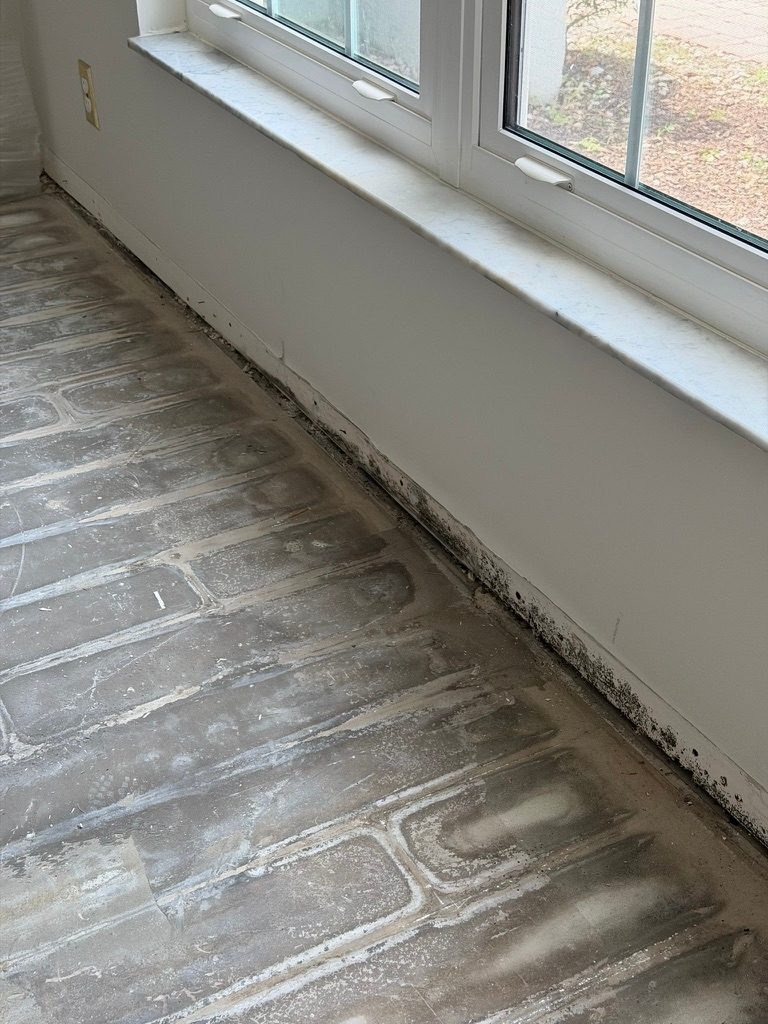
Inside a unit, that exposure usually shows itself at predictable places: window and sliding door perimeters, balcony thresholds and terrace drainage, and the wall base beneath long runs of glazing. Seasonal occupancy is common in this market, and a unit closed up for months with cooling set back can hold humidity in ways an occupied unit does not. Shared risers, corridors, and mechanical rooms add a second question that matters for any high rise assessment, which is whether an observed condition belongs to the unit or to the building itself.
Scaled to high rise oceanfront residential construction
Visual Assessment
A systematic review scaled to tower construction, covering the unit interior, window wall and balcony door assemblies, and the interfaces where a unit meets shared building elements.
Moisture Investigation
Moisture mapping focused on oceanfront exposure: glazing and sliding door perimeters, balcony thresholds, and wall assemblies subject to wind driven rain at height.
Thermal Imaging
Infrared scanning identifies temperature differences that can be consistent with trapped moisture. It does not detect mold directly; any anomaly is confirmed with a direct instrument reading.
HVAC Evaluation
Air handler and fan coil review, particularly relevant in towers where shared risers and central equipment affect several units at once.
Mold and Air Quality Testing
Independent, accredited laboratory sampling performed when the visual and instrumented findings scientifically warrant it.
Built for a market dominated by condominium associations
Home Buyers
An independent read on a unit's condition before closing, including the glazing, balcony, and mechanical details that matter most in an oceanfront tower. See our Home Buyers Mold Inspections service.
Sellers
A documented pre-listing inspection gives a seller a clear record of the unit's condition ahead of buyer due diligence, which carries weight in a market where nearly every sale is a condominium unit.
Condo Boards
Boards benefit from findings that separate a unit level condition from a building envelope or shared riser condition, since responsibility for each typically falls to a different party. See our Commercial Mold Inspections service.
Seasonal and Absentee Owners
For owners who occupy a unit only part of the year, an inspection provides an objective record of interior conditions after months of closed up, lightly conditioned vacancy.
No remediation contract waiting behind our findings
Home Enviro has served South Florida since 2016, supported by more than 20 years of industry experience. We perform independent mold inspection, testing, and Post Remediation Verification exclusively, and we never perform remediation, removal, or repair work of any kind.
For a condominium board overseeing an oceanfront tower, or an individual owner questioning a stain beneath a window wall, that independence removes a real conflict of interest: findings are not shaped by an incentive to recommend a larger scope of remediation work. The report documents what is present and where it most likely originates, leaving the decision about next steps, including who to hire for any remediation, entirely with the owner or association.
Objective results for individual units and shared building systems alike
Sampling is appropriate when growth is not clearly visible but symptoms are reported, when a property has a documented history of water intrusion, or when an owner, board, or manager needs objective, lab-verified documentation to support a decision.
Visual Observations
What can be seen directly during the walkthrough: staining, discoloration, or suspected microbial growth.
Instrument Readings
Moisture meter and thermal imaging data, reported as a distinct category of evidence from a visual observation.
Laboratory Findings
Independent lab analysis when sampling is performed. One air sample never proves the absence of concealed mold.
What you receive after the inspection
Photo and Data Documentation
Every finding is documented with photographs, moisture readings, and thermal imagery from your Sunny Isles Beach property.
Laboratory Results
When sampling was performed, independent laboratory results are included in full, clearly separated from field observations.
Findings and Recommendations
Findings trace back to a specific building condition, closing with clear, independent recommendations suitable for an individual owner, a board, or a manager.
Other disciplines relevant to Sunny Isles Beach properties
Commercial Mold Inspections
Assessments scaled to the condominium towers and association governed buildings that define the city.
HVAC Mold Inspections
Fan coil, air handler, and riser related inspection for high rise residential mechanical systems.
Mold Inspection
The core independent, evidence-based inspection process applied to every Sunny Isles Beach property.
Mold inspection in Sunny Isles Beach, answered
A tower unit is inspected as part of a larger building rather than as a standalone structure. That means paying attention to the window wall and balcony door assemblies, the wall base beneath long glazing runs, terrace and balcony drainage, and any interface with shared corridors, risers, or mechanical spaces. It also means the report has to be clear about which observations sit inside the unit and which may involve a common element.
Yes. Height increases rather than reduces exposure to wind driven rain, and salt laden air acts continuously on sealants, fasteners, and metal components in glazing and railing assemblies. Upper floor units commonly show moisture at glazing perimeters and balcony thresholds, which is one of the reasons an assessment there focuses on the building envelope instead of the ground level conditions a house would present.
It can. A sealed unit with cooling set back or switched off during a humid stretch has little air movement and reduced dehumidification, so indoor humidity can climb and stay elevated for extended periods. That is a common reason owners return to a musty smell in an otherwise clean unit, and it is an ordinary reason to document interior conditions with instrument readings rather than by impression alone.
Not on its own. New buildings can still experience moisture intrusion around glazing, balconies, or shared mechanical spaces during the first years after completion, and a detail that was installed imperfectly can take several rainy seasons to reveal itself. Oceanfront exposure applies to a new tower and an older one alike, so an objective assessment is based on measurements rather than on the building's age.
No. Thermal imaging detects temperature differences on a surface that can be consistent with trapped moisture, but it cannot see mold itself or confirm what is causing the temperature change. Any anomaly found is checked with a moisture meter, and laboratory sampling is used only when that follow up evidence makes testing scientifically warranted.
No. Home Enviro performs independent inspection, testing, and Post Remediation Verification exclusively, and we do not perform remediation, removal, or repair work of any kind. If remediation turns out to be necessary, you would select and hire a separate contractor, and our documented findings give that contractor a clear, unbiased starting point.
Home Enviro also serves these nearby Miami-Dade County areas
Book an independent mold inspection in Sunny Isles Beach
Serving unit owners, buyers, condominium boards, and property managers throughout Sunny Isles Beach and greater Miami-Dade County.