Mold inspection for a city that runs from Biscayne Bay to the inland ridge
North Miami incorporated as a town in 1926, changed its name in 1931, and adopted its present city charter in 1953. Roughly ten miles north of Miami, the city stretches from Biscayne Bay on its eastern edge to inland neighborhoods well to the west, and Home Enviro applies the same independent, measurement driven inspection approach across all of it.
A bayfront edge and an inland interior in ten square miles
Census figures put North Miami at just over ten square miles, and about fifteen percent of that total is water. A waterfront home on a finger canal off Biscayne Bay and a slab built house several miles inland sit inside the same city limits, face different exposures, and cannot be assessed with the same assumptions. Every inspection is scoped to the property actually in front of it.
A midcentury housing stock on low, water adjacent ground
North Miami began as the settlement around Arch Creek, where a natural limestone bridge once carried an 1856 military trail between Fort Dallas and Fort Lauderdale. Voters incorporated the community as a town in 1926 under the name Town of Miami Shores, the Florida Legislature reassigned that name in 1931 and the town became North Miami, and a new charter creating the present city manager government took effect in 1953. The decisive growth period came after 1945, when returning veterans and young families arrived in volume; by 1951 the town was being reported nationally as one of the fastest growing in the country.
That timeline matters for a moisture assessment, because it means a very large share of the city's single family housing dates from the postwar decades. Homes of that era in South Florida commonly combine slab on grade construction, original or once replaced roofing, cast iron or galvanized drain lines that have since aged, and air conditioning that was added or upgraded rather than designed in from the start. None of those conditions cause a problem by themselves. Together they create a set of places worth checking directly: slab perimeters, wall to floor joints, the air handler closet, and the ceiling plane below any roof penetration.
Geography adds a second layer. The city lies on Biscayne Bay with a mean elevation near seven feet, and its eastern neighborhoods, including the Keystone Point and Sans Souci areas, include canal and bay frontage. Properties there deal with salt air, persistent humidity, and wind driven rain in a way that inland neighborhoods to the west simply do not, while those inland blocks are more often dealing with drainage, irrigation, and aging plumbing. North Miami also contains the Biscayne Bay Campus of Florida International University, the adjoining Oleta River State Park, and a downtown core with older commercial and multifamily buildings, so the building types an inspector encounters here range well past the single family house.
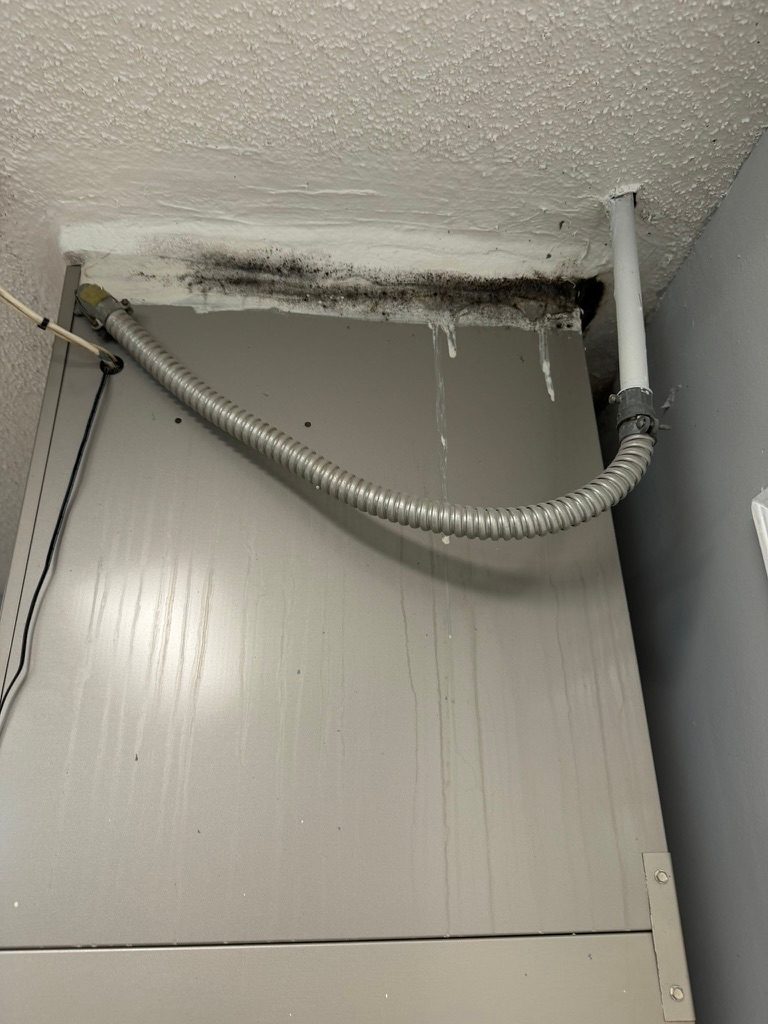
Scaled to bayfront properties and inland midcentury homes alike
Visual Assessment
A systematic review adapted to the property's construction era, whether that means a postwar slab built house, a renovated bayfront home, or a unit in an older multifamily building.
Moisture Investigation
Moisture mapping tailored to exposure: salt air and wind driven rain along the bay and canal frontage, or aging plumbing, roofing, and drainage in the inland neighborhoods.
Thermal Imaging
Infrared scanning identifies temperature differences that can be consistent with trapped moisture. It does not detect mold directly; any anomaly is confirmed with a direct instrument reading.
HVAC Evaluation
Air handler and ductwork review, particularly relevant in a city where much of the cooling equipment was retrofitted into homes built before central air was standard.
Mold and Air Quality Testing
Independent, accredited laboratory sampling performed when the visual and instrumented findings scientifically warrant it.
Built for a market that mixes single family homes, canal frontage, and older multifamily
Home Buyers
An independent read on a property's condition before closing, which carries real weight in a city where most housing predates current building code and drainage standards. See our Home Buyers Mold Inspections service.
Sellers
A documented pre-listing inspection gives sellers a clear record of a property's condition ahead of buyer due diligence, whether the home is a postwar ranch or a rebuilt waterfront house.
HOA and Condo Boards
For townhome, duplex, and small condominium properties, findings that separate a unit level issue from a shared roof, wall, or mechanical system issue. See our Commercial Mold Inspections service.
Property Managers
Technical background for evaluating recurring moisture or air quality complaints across a managed portfolio spanning several North Miami building types and eras.
No remediation contract waiting behind our findings
Home Enviro has served South Florida since 2016, supported by more than 20 years of industry experience. We perform independent mold inspection, testing, and Post Remediation Verification exclusively, and we never perform remediation, removal, or repair work of any kind.
For an owner of a postwar house several miles inland, or a board overseeing an older bayfront building, that independence removes a real conflict of interest: findings are not shaped by an incentive to recommend a larger scope of remediation work. The report documents what is present and where it most likely originates, leaving the decision about next steps, including who to hire for any remediation, entirely up to the property owner or association.
Objective results for older homes and shared buildings alike
Sampling is appropriate when growth is not clearly visible but symptoms are reported, when a property has a documented history of water intrusion, or when an owner, board, or manager needs objective, lab verified documentation to support a decision.
Visual Observations
What can be seen directly during the walkthrough: staining, discoloration, or suspected microbial growth.
Instrument Readings
Moisture meter and thermal imaging data, reported as a distinct category of evidence from a visual observation.
Laboratory Findings
Independent lab analysis when sampling is performed. One air sample never proves the absence of concealed mold.
What you receive after the inspection
Photo and Data Documentation
Every finding is documented with photographs, moisture readings, and thermal imagery from your North Miami property.
Laboratory Results
When sampling was performed, independent laboratory results are included in full, clearly separated from field observations.
Findings and Recommendations
Findings trace back to a specific building condition, closing with clear, independent recommendations suitable for an individual owner, a manager, or an association board.
Other disciplines relevant to North Miami properties
Commercial Mold Inspections
Assessments suited to North Miami's older multifamily buildings, townhome communities, and commercial properties.
HVAC Mold Inspections
Air handler and ductwork inspection, including systems retrofitted into homes built before central cooling was standard.
Mold Inspection
The core independent, evidence based inspection process used on every North Miami property.
Mold inspection in North Miami, answered
Voters incorporated the community as a town in 1926, the name North Miami was adopted in 1931, and the present city charter took effect in 1953. The practical consequence is that most of the housing stock was built during the postwar decades rather than recently, so an inspection here is usually working with slab on grade construction, aged drain lines, and cooling equipment that was added or replaced over time. Those are conditions to verify with direct readings, not defects to assume.
Yes, in exposure. Roughly fifteen percent of North Miami's total area is water, and the eastern neighborhoods include canal and bay frontage where salt air, sustained humidity, and wind driven rain reach the building envelope constantly. Inland properties are more often dealing with drainage, irrigation, and plumbing age. The instruments used are the same; where they get pointed first is what changes.
No. The city's mean elevation is around seven feet, which is a reason to check certain locations carefully rather than a finding in itself. Low ground raises the plausibility of slab edge moisture, standing water against a foundation, and slow drainage after heavy rain, so those areas get direct moisture readings during the walkthrough. Whether anything is actually elevated is decided by the measurement, not by the elevation map.
In a shared building the inspection usually has to separate what is happening inside one unit from what may be occurring in a shared wall, roof, or mechanical system, because responsibility for each normally falls to a different party. That distinction is the reason our Commercial Mold Inspections service exists as a separate scope.
No. Thermal imaging detects temperature differences on a surface that can be consistent with trapped moisture, but it cannot see mold itself or confirm what is causing the temperature change. Any anomaly found is checked with a moisture meter, and laboratory sampling is used only when that follow up evidence makes testing scientifically warranted.
No. Home Enviro performs independent inspection, testing, and Post Remediation Verification exclusively, and we do not perform remediation, removal, or repair work of any kind. If remediation turns out to be necessary, you would select and hire a separate contractor, and our documented findings give that contractor a clear, unbiased starting point.
Home Enviro also serves these nearby Miami-Dade County cities
Book an independent mold inspection in North Miami
Serving homeowners, buyers, landlords, and association boards throughout North Miami and greater Miami-Dade County.