Two Pembroke Pines, one inspection standard: the older east side and post-Andrew West Pines
Pembroke Pines grew in two distinct waves, an original core built from the mid-1950s through the 1980s, and West Pines, largely developed since Hurricane Andrew in 1992. Home Enviro applies the same rigorous, evidence-based inspection to both.
A newer subdivision is not automatically a lower-risk home
It is tempting to assume a home built after 1992 in West Pines carries less moisture risk than one in the city's original core. Storm history and construction age both matter, but neither one tells the whole story on its own.
A newer roof and newer window seals reduce certain risks, but a home's storm exposure history, drainage conditions, and HVAC maintenance record matter just as much as the year it was built. Home Enviro has served South Florida since 2016, supported by more than 20 years of industry experience. We apply the same visual assessment, moisture mapping, and instrument-based methodology regardless of a home's age or which side of Interstate 75 it sits on.
Moisture concerns in Pembroke Pines
Pembroke Pines has a documented storm and drainage history that differs meaningfully between its older core and its western subdivisions.
West Pines: newer construction, documented storm exposure
The area west of Interstate 75, known as West Pines, consists mostly of subdivisions built since Hurricane Andrew in 1992, as thousands of residents relocated north from more southern parts of Miami-Dade County. Communities including Chapel Trail and Silver Lakes reportedly experienced significant rainfall and storm impact during Hurricane Irene in 1999, with up to an estimated 19 inches of rain, and again during Hurricane Katrina in 2005, which passed directly over the city as a Category 1 storm.
The older eastern core: decades more wear
Pembroke Pines' original city footprint was less than one square mile, developed from the first home built in 1956 through major annexations in 1973, 1977, and 1980. Homes in this older core have simply had more decades of exposure to roof, plumbing, and window-seal wear than the post-1992 subdivisions to the west.
Flat terrain and a high water table
The city faces persistent inland drainage challenges from the C-9 canal system on flat terrain with a high water table. A 2017 study ranked Pembroke Pines third among U.S. cities most vulnerable to coastal flooding, with an estimated 116,000 residents living within FEMA's coastal floodplain.
Wilma's wind exposure, even without a direct hit
Hurricane Wilma passed about 20 miles north of the city in 2005, yet Pembroke Pines still recorded sustained winds of 92 mph and gusts of 101 mph, among the strongest winds residents had experienced in decades, leaving most of the city without power for days and causing reported minor roof and screen damage.
Weighted toward moisture history, wherever the home sits
Given the city's documented storm and drainage history, moisture investigation carries particular weight in a Pembroke Pines inspection.
Visual Assessment
A systematic review of the structure, roof, and window and door seals, with attention to age-related wear that varies between the older core and the newer western subdivisions.
Moisture Investigation
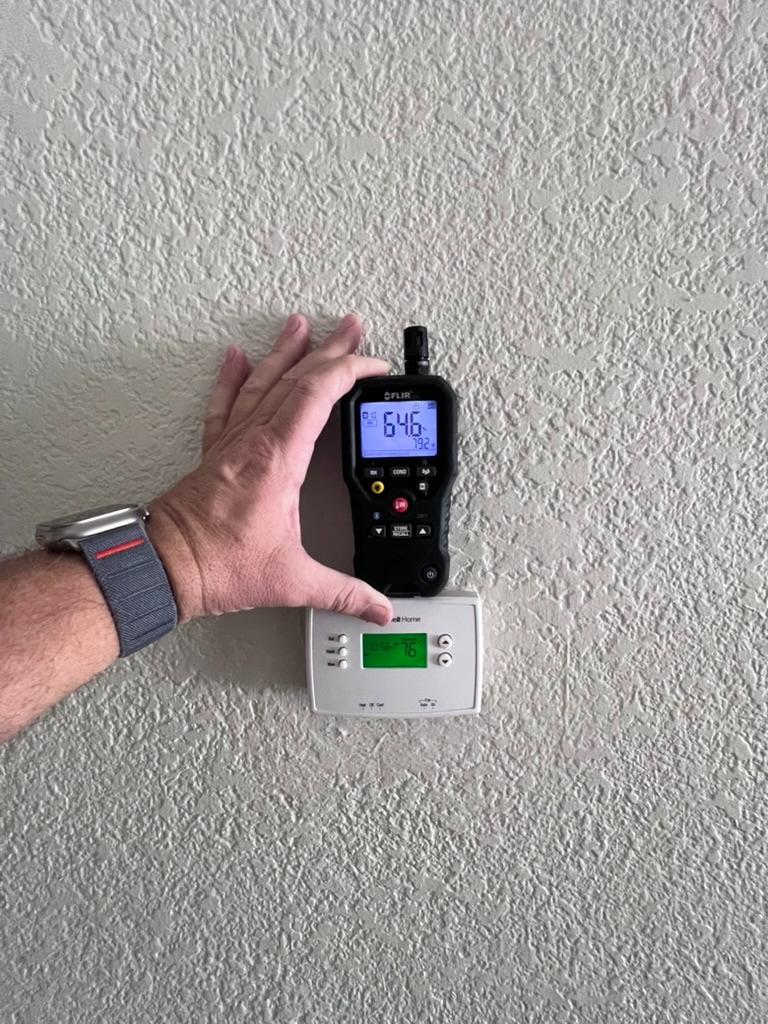
Given the city's flat terrain, high water table, and documented rainfall history in communities like Chapel Trail and Silver Lakes, pin and pinless moisture meter readings are a central part of every inspection here.
Thermal Imaging
Infrared scanning to find temperature differences that may indicate hidden moisture from past wind-driven rain events. Thermal imaging finds temperature anomalies only; it does not detect mold itself.
HVAC Evaluation
Assessment of air handlers, ductwork, and condensate management, relevant to both older systems in the original city core and newer installations in West Pines subdivisions.
Mold and Air Quality Testing
Air and surface sampling processed by independent, accredited laboratories, when the visual and instrument findings indicate it is warranted.
Learn more about our Moisture & Water Intrusion and Mold Testing services.
A finding of storm-related moisture is not a sales pitch
Home Enviro performs inspection, testing, and Post-Remediation Verification only. We never perform remediation, removal, or repair work of any kind.
This matters in a city with a documented history of hurricane exposure like Pembroke Pines. When a homeowner in Chapel Trail, Silver Lakes, or anywhere else in the city has a documented moisture finding following past storm activity, it is important that the person identifying the problem has no financial stake in what happens next. Our report gives the homeowner an independent, defensible basis for deciding whether a licensed remediation contractor is needed, without our findings being shaped by a sale.
Buying, selling, or managing property in Pembroke Pines
Whether a property sits in the older eastern core or a post-1992 West Pines subdivision, its storm and moisture history is a legitimate transaction consideration.
Home Buyers
Buyers considering a resale in the city's older core, or a home in West Pines with reported past storm exposure, benefit from an independent, pre-purchase inspection. See our Home Buyers Mold Inspections service.
Sellers
A pre-listing inspection documents current conditions and gives sellers an objective record to share with prospective buyers, regardless of which part of the city the home is in.
Property Managers and Community Associations
Managers overseeing multiple units across communities like Pembroke Falls or Pembroke Lakes benefit from a consistent, independent inspection standard for recurring moisture or air quality concerns. See our Commercial Mold Inspections service.
When sampling may be appropriate
Sampling is typically appropriate when a visual assessment or moisture readings identify suspected microbial growth, when a home has a documented history of hurricane-related water intrusion, such as reported flooding in Chapel Trail or Silver Lakes, when a transaction requires documented findings, or when an occupant reports symptoms without a visible source. A single air sample never proves the absence of concealed mold; it characterizes conditions at one point in time in one location, which is why sample placement follows the visual and moisture-mapping findings.
What you receive
Documented Findings
Photos, moisture readings, and thermal imagery from the on-site visit, organized by location and cross-referenced against reported storm history where relevant.
Laboratory Results
When sampling was performed, full independent laboratory results are included, with sample locations and methodology documented.
Independent Recommendations
Clear next-step recommendations based only on the evidence gathered, with no financial interest in whether remediation work follows.
Pembroke Pines mold inspection questions
The inspection methodology stays the same everywhere: visual assessment, moisture mapping, thermal imaging, and sampling when warranted. What differs is context. West Pines, the area west of Interstate 75, consists mostly of subdivisions built since Hurricane Andrew in 1992, so those homes are generally newer. The city's older core, developed from the mid-1950s through the 1980s, has had more decades of roof, plumbing, and window-seal wear, which is part of what we document during a visual assessment.
According to reported city history, Hurricane Irene in 1999 dropped up to 16 inches of rain citywide, with the Chapel Trail and Silver Lakes communities receiving an estimated 19 inches, and Hurricane Katrina passed directly over the city in 2005 causing downed trees and power lines especially in those same communities. We treat this as reported property and area history rather than something we independently verified, but it is a legitimate reason a homeowner in these communities might want a documented moisture inspection.
No. Pembroke Pines recorded sustained winds of 92 mph and gusts of 101 mph during Hurricane Wilma, the strongest winds many residents had experienced in decades, along with extended power outages and reported minor roof and screen damage. A single air sample characterizes conditions in one location at one point in time and never proves the absence of concealed mold elsewhere in a structure. That is why our approach starts with a full visual assessment and moisture mapping before any sampling decision is made.
Yes. Homes and multifamily properties near the Pines Boulevard and Flamingo Road retail corridor fall within our normal Pembroke Pines service area, and we do not treat proximity to commercial development as a special condition beyond the general property context we note for every inspection.
Thermal imaging identifies temperature differences on a surface, which can be consistent with hidden moisture behind a wall or under flooring. It does not detect mold directly and does not see through a wall to growth itself. It is one input, alongside a visual assessment and moisture meter readings, used to decide where further investigation or sampling may be warranted.
No. Home Enviro performs independent inspection, testing, and Post-Remediation Verification only, and never performs remediation, removal, or repair work. This keeps our findings free of any financial incentive tied to a remediation outcome.
Mold inspection in neighboring Broward cities
Request an independent mold inspection in Pembroke Pines
Serving homes in the older eastern core and the West Pines subdivisions, throughout Pembroke Pines and the rest of Miami-Dade, Broward, and Palm Beach Counties.